Service in Appalachia: Fighting the Flames, a Personal Account
By Jenny Morgan
Service has been a part of my life in Appalachia since I was a kid. I have vague memories of when I was little, playing with a pop-gun in my Dada’s campaign office when he was running for Jailor. When I was in high school, my family was greatly involved in the mayor’s race. I volunteered countless hours going door-to-door and talking to people about the man we were campaigning for. You’d be surprised how many people have doorbells that actually work. There is this tradition in my county where we hold the candidates’ yard signs outside of the voting areas and wave at the people passing by, telling them to go vote. I must’ve waved at thousands of people trying to get them to make sure their voices were heard.
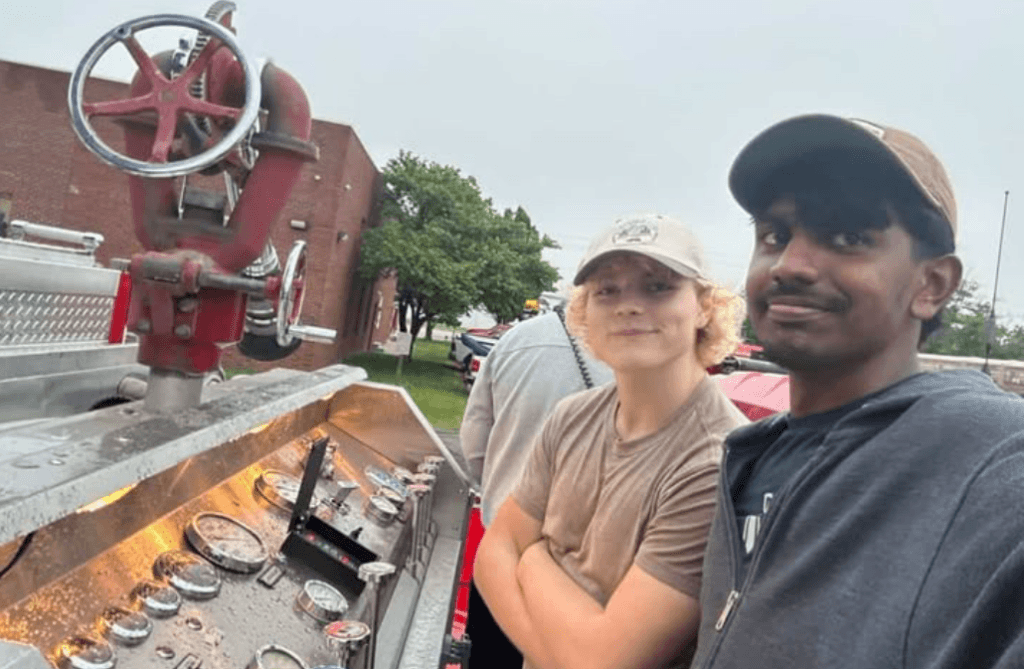
After high school, I continued my dedication to service at the Keavy Volunteer Fire Station, where I was a fire fighter for about a year before moving to Berea. I was interested in the fire service because I had a friend in high school who I looked up to that volunteered at the Laurel County Fire Department. My family has many police in it as well, so it felt natural that I would go into some type of emergency response, even though it’s not a career route for me. I eventually joined the Berea Volunteer Fire and Rescue Department not but ten minutes away from the college. Many of the people that I serve with are from Appalachia, and many don’t ever plan on becoming paid fire fighters. I don’t either. Like those volunteers, I just saw a need and decided that I was going to fill it. Most people aren’t aware of this, but the number of people going into the fire service has dwindled drastically. I remember the chief at Keavy, Mike Bales, telling me that most people going into it grew up in it. He told me I was an anomaly, which I take with great pride.
I was worried about not having the time to keep contributing to my community when I applied to Berea College. There have been times in my life where my mental health has suffered because I wasn’t able to do some version of service. One of those was when I was living in Berea for the first few months. I was trying to let myself get accustomed to life here before doing anything extra, but I quickly realized service work wasn’t extra, it was essential. Without doing any service work I had this overwhelming feeling of uselessness, and I felt selfish for not contributing to anything. During my college visit, I was very fortunate to meet a labor student who was a part of the Bonner Scholars program (a program attached to CELTS), and they told me about all of the different kinds of service that I could do as a student here at the college. To say that I was relieved is an understatement. I’m going into my third year now, and already I’ve done after-school programming for elementary students, fundraised for and worked at the local food bank, cooked meals for the homeless with Room in the Inn, worked on several projects with Habitat for Humanity—even going on a spring trip to South Carolina to help roof a home they were building there. I’m doing my second summer of service now with my fire department in Berea. Next semester I’ll be working with Spotlight theatre, a local theatre that does some non-profit work teaching theatre to children. I’ll be teaching classes to children on acting and may even get the chance to direct some shows.
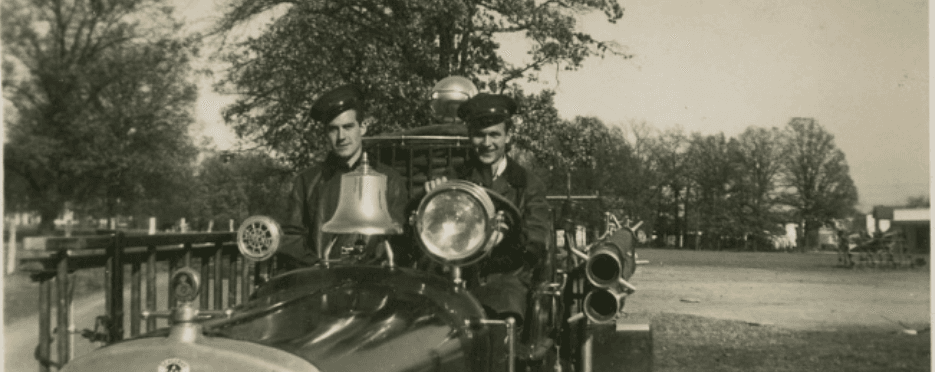
Something that I find fascinating about our college and its role in this region is how it has worked to serve the greater community. Our college is responsible for many different feats of service and justice. Everything from abolitionist work to starting our first form of fire service in the city of Berea in the late 1800s. It started at the college as a labor position, known as the “bucket brigade” because of the rudimentary method of putting out fires with just buckets of water. What they would do is have a line of about 25 students that would pass buckets of water to the fire so that they could fight it. Another job they had was to stock the buckets across the campus buildings. They would put a lime solution on the top to keep the water from evaporating. Their tasks and ability to put out fires got better as time progressed. They moved from buckets to wagons, and then from wagons to engines. Though the history of our student firefighters has not been well preserved, there are some documents and pictures scattered about that show how well organized they were. After nearly 70 years, the college did eventually get the city to take over the responsibility of running a professional fire service, around 1966-1967 (1 and 2).
I feel proud to be a part of the contemporary legacy of the “bucket brigade.” Several students have come and gone from what is now the Berea Volunteer department during my short time here and hopefully more will follow after me. To be able to look back and see how far we’ve come from those bucket days gives me a lot of joy and curiosity about what’s next for our niche little history. In the future I hope to see more funding for our volunteer services. Maybe in my lifetime we’ll be able to afford the switch to electric tools over our cheaper hydraulic ones that take up so much space, and maybe we’ll be able to afford apparatuses that aren’t older than most of the members. After college, I’m planning on getting my EMT just to be able to contribute more as a first responder.
One challenge that I would like to leave for you is to try and find a way to help wherever you are. Whatever your capacity or ability, if you can contribute to something important to you, then you should do it for the sake of doing it.
(1) Cowell, Carl. “Berea Fire Department,” 1989, Folder: 7. Berea College Fire Department, RG 05-5.21. Berea College Special Collections and Archives.
(2) Smith, A. Pruitte. “History of Berea College Fire Department,” 1961, Folder: 5. Berea College Fire Department, RG 05-5.21. Berea College Special Collections and Archives.